Happy Holi Nepal 2026
What is Holi? The Festival of Colours in Nepal
Holi — known in Nepal as Fagu Purnima or Fagutiva — is one of the most beloved and vibrant festivals celebrated across the country. Falling on the full moon day of the Nepali month of Falgun (February–March), it marks the arrival of spring and the triumph of good over evil. Streets transform into explosions of colour, music fills the air, and strangers become friends as coloured powder and water are shared in pure celebration.
In Nepal, Holi carries deep roots in Hindu mythology, particularly the story of Prahlad and Holika. According to legend, the demon king Hiranyakashyap tried to kill his own son Prahlad for his devotion to Lord Vishnu. His sister Holika, believed to be immune to fire, sat with Prahlad in a pyre. Through divine grace, Prahlad survived while Holika perished — a reminder that devotion and goodness always prevail. The bonfire lit on the eve of Holi, called Holika Dahan, commemorates this story to this day.
What makes Nepal’s Holi truly special is how it blends Hindu tradition with the warm Nepali spirit of community. Whether you are in the ancient squares of Kathmandu, the lively ghats of Pokhara, or the colourful towns of the Terai, Holi here is an experience unlike anywhere else in the world.
The Colours of Holi and What They Represent
Every colour thrown during Holi carries a meaning rooted in culture, nature, and spirituality.
How Nepal Celebrates Holi
Celebrations in Nepal begin the evening before the main day with Holika Dahan — the lighting of a sacred bonfire in town squares and temple courtyards. Families and communities gather around the fire, singing devotional songs and offering prayers. In Kathmandu’s Basantapur Durbar Square, this bonfire ceremony is one of the most atmospheric events of the Nepali calendar.
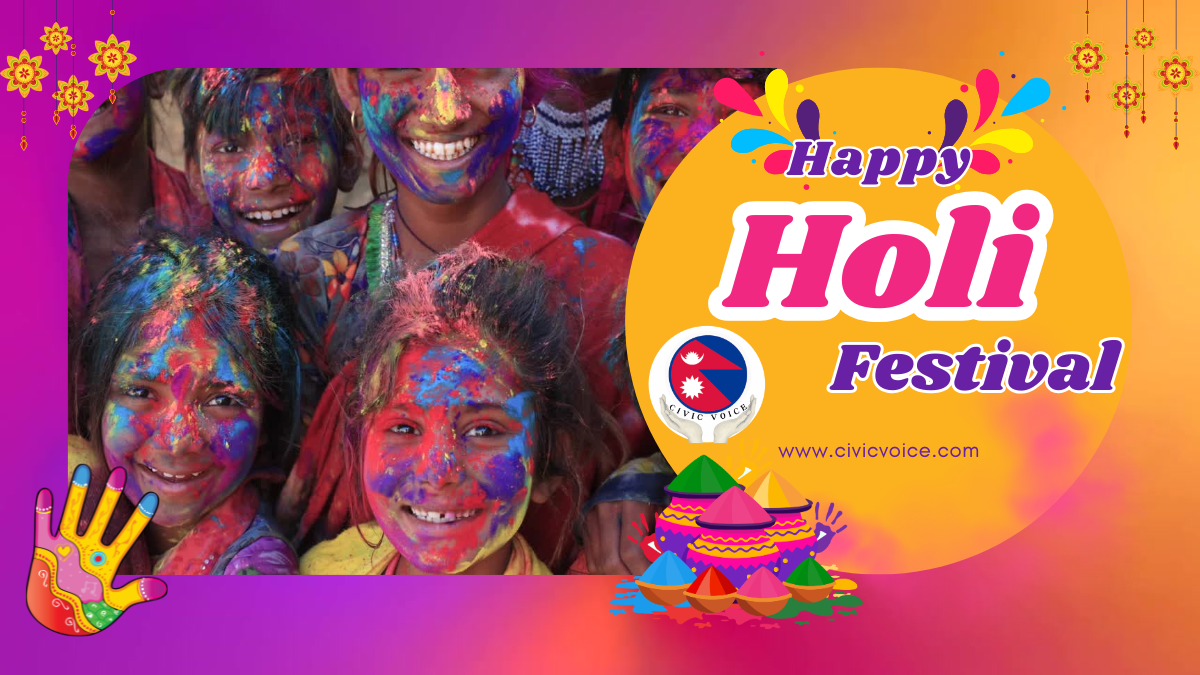
The following morning, the real colour festival begins. Children rush into the streets armed with packets of abir (coloured powder) and water guns called pichkaris. Neighbourhoods become rivers of colour. It is customary to smear the cheeks of elders and friends with colour as a sign of love and blessing. In many parts of Nepal, neighbours share sel roti (a traditional rice flour doughnut), dahi (yoghurt), and sweet snacks — making Holi as much a festival of food as it is of colour.
In the Terai region bordering India, Holi celebrations are especially lively and closely mirror the traditions of neighbouring Uttar Pradesh and Bihar — with folk music, dance, and large community gatherings lasting well into the night.
Holika Dahan — The Eve of Holi
On the night before the colour festival, communities erect a bonfire symbolising the burning of Holika. In Kathmandu, the central ceremony takes place at Basantapur, where a ceremonial chir — a bamboo pole decorated with strips of cloth — is erected weeks in advance and then burned on Holika Dahan night. This tradition is unique to Nepal’s Holi celebrations and draws large crowds from across the valley.
Best Places to Celebrate Holi in Nepal
From ancient temples to lakeside streets, here are the most memorable places to experience Holi in Nepal.
Basantapur, Kathmandu
The historic Durbar Square hosts Nepal’s most iconic Holika Dahan bonfire and colour celebrations.
Lakeside Pokhara
Tourists and locals celebrate together along Phewa Lake shore with music, colour, and beautiful views.
Terai Region
Birgunj, Janakpur, and Biratnagar celebrate with massive energy — music, dance, and street festivities all day.
Thamel, Kathmandu
The tourist hub turns into a massive Holi celebration — ideal for travellers wanting a lively experience.
Janakpur
Birthplace of Goddess Sita — Holi here carries deep spiritual meaning and is celebrated with devotion.
Bhaktapur & Patan
Ancient Newari towns offer a culturally rich Holi with traditional music and heritage backdrops.
Happy Holi 2026 Wishes in Nepali & English
Share these heartfelt Holi wishes with your family, friends, and loved ones this festive season.
Tips for a Safe and Joyful Holi in Nepal
To make the most of your Holi celebrations in Nepal, a few simple preparations go a long way. Apply mustard oil or coconut oil on your skin and hair before playing with colours — this creates a protective layer that makes colours much easier to wash off afterwards. Choose organic, natural colours made from flowers and herbs rather than synthetic powders, which can irritate skin and eyes.
Wear old clothes you do not mind staining, and keep a change of clothes ready for after the celebrations. If you are travelling to Nepal specifically for Holi, book accommodation in Kathmandu’s Thamel area or Pokhara’s Lakeside district well in advance — these fill up quickly around the festival. Carry a waterproof bag for your phone and valuables, and celebrate in public squares where the atmosphere is safe and welcoming for everyone.
Frequently Asked Questions — Holi in Nepal
Everything you need to know about Holi 2026 in Nepal.
When is Holi 2026 in Nepal?
Holi 2026 falls in March. The Terai region celebrates one day earlier on the full moon night of Falgun, while the hilly regions including Kathmandu celebrate the following day. The exact date is confirmed by Nepal’s official government calendar each year.
Is Holi a public holiday in Nepal?
Yes. Holi (Fagu Purnima) is a gazetted public holiday in Nepal. Government offices, schools, and most businesses remain closed on this day throughout the country.
What is the local name for Holi in Nepal?
Holi is locally known as Fagu Purnima or Fagutiva in Nepal. “Fagu” refers to the red powder traditionally used during the festival, and “Purnima” means full moon day in Sanskrit.
Can tourists celebrate Holi in Nepal?
Absolutely. Nepal’s Holi celebrations are welcoming and inclusive. Tourists are warmly invited to join, especially in Kathmandu’s Basantapur, Thamel, and Pokhara’s Lakeside. Accepting colour is seen as receiving a blessing — participation is warmly encouraged.
What food is traditionally eaten during Holi in Nepal?
Traditional Holi foods in Nepal include sel roti (crispy rice doughnut), dahi (yoghurt), and aalu tama (potato and bamboo shoot curry). In the Terai, gujiya (sweet dumplings) and thandai (spiced milk drink) are also widely enjoyed.
About the Author